


Most companies focus on the booth. The structure, the screens, the graphics. But the real difference between a booth that gets ignored and one that drives results comes down to one role: the trade show presenter. This is where trade show engagement actually begins, not with design, but with what’s happening inside the space.
Trade Show Engagement Starts With Energy, Not Structure
You can have a beautiful booth and still struggle with trade show booth engagement. Attendees don’t stop because something looks expensive. They stop because something is happening.
A strong trade show engagement strategy creates visible energy. It gives people a reason to pause, watch, and lean in. Without that, even the best booth becomes background noise.
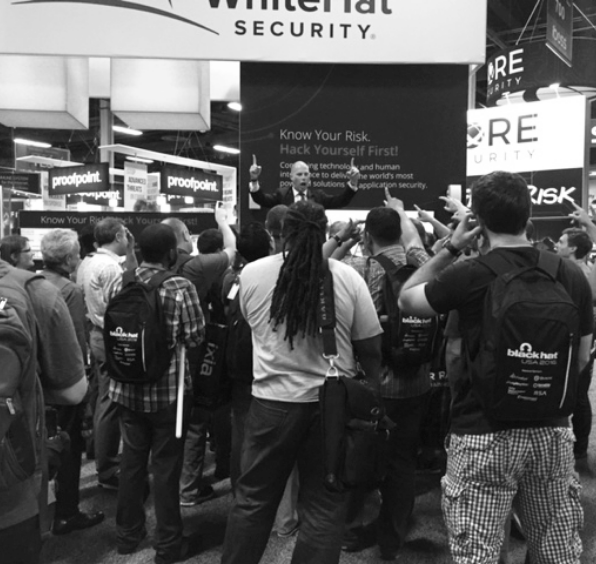
This is why trade show audience engagement matters. When people see a group gathered, listening, reacting, participating, it signals value. And that signal pulls more people in.
The Role of a Trade Show Presenter
A skilled trade show presenter acts as the engine of the booth. They don’t wait for conversations to happen. They create them at scale.
Through structured trade show presentations, they:
- attract a crowd
- hold attention
- deliver a clear message
- guide attendees to the next step
This is where many companies fall short. They rely on one-to-one conversations, which limits volume and consistency. A presenter creates leverage, turning individual interactions into shared experiences that drive momentum.
Why Trade Show Booth Engagement Often Falls Flat
Most teams are not lacking effort. They are lacking structure.
Without proper trade show training, booth staff default to:
- waiting instead of initiating
- talking instead of engaging
- explaining instead of creating interest
That’s not a people problem. It’s a system problem.
When your team understands how to engage, qualify, and transition conversations, your booth becomes more than a space. It becomes a functioning environment designed for outcomes.
Using Experience to Drive Engagement
This is where creativity comes in. Strong trade show exhibit ideas are not just visual. They are experiential.
In some cases, companies use a trade show magician to create an interactive moment that draws attention and builds curiosity. But the real value isn’t the trick. It’s what happens after.
The experience becomes the doorway to a message. It captures attention, then transitions into something meaningful. That’s the difference between entertainment and strategy.
Turning Engagement Into Results
Engagement on its own is not the goal. It’s the bridge.
A well-executed approach connects:
- attraction
- interaction
- message
- next steps
When your trade show presenter is aligned with your trade show engagement strategy, everything works together. The crowd isn’t just watching. They’re moving forward.
Final Thought
If your booth isn’t generating the results you want, don’t just look at the space. Look at what’s happening inside it.
Because at the end of the day, trade show success isn’t about presence. It’s about participation. And the fastest way to create that is through intentional engagement, led by the right presenter, supported by the right training, and delivered through experiences people actually remember.
Want to see what this looks like in your booth?
Book an Insight Session and we’ll map out how to turn your trade show engagement into predictable pipeline.